

Magnesium
Your Magnesium Supplement
Isn't Working
the Way You Think.
The average American is only getting 50% of their daily recommended magnesium — and yet supplement sales are at an all-time high. Something doesn't add up. One Forward Bar closes that gap with 45% of your daily magnesium, from real food, not a pill.
Close the Gap with Real Food MagnesiumWhy Whole Food Magnesium
Changes Everything
The supplement industry would have you believe a pill is just as good as food. It's not. Here are the five reasons the science disagrees.
The Food Matrix Makes It Actually Absorbable
When magnesium exists inside a whole food — a pumpkin seed, a hemp seed, a piece of dark chocolate — it comes bound within a complex biological scaffold: fiber, phytonutrients, co-factor vitamins, and natural organic acids like citrate and malate. This food matrix is not incidental. It's the delivery system your gut evolved to work with over hundreds of thousands of years.
Isolated magnesium oxide (the form used in the vast majority of cheap supplements) has an absorption rate as low as 4%. Even the better forms — glycinate, citrate — are stripped of the co-factors that facilitate transport across intestinal cells. When magnesium arrives packaged inside food, your gut recognizes the full molecular context and absorption pathways open appropriately.
Magnesium Needs Its Partners to Work
Magnesium doesn't operate alone. Its activation inside your cells depends on a precise interplay with Vitamin B6, Vitamin D, potassium, and calcium — minerals and vitamins that exist naturally alongside magnesium in whole plant foods. This is not coincidence. It's co-evolution.
When you take an isolated magnesium supplement, your body still has to source these co-factors from somewhere. If they're not in your diet, the magnesium you just swallowed simply cannot complete its cellular functions — even if it was absorbed. You've taken the pill. You still feel lousy. And you wonder why.
Pumpkin seeds, hemp seeds, and dark leafy greens deliver magnesium the way it was always meant to arrive: alongside the exact co-nutrients it needs to do its job. The whole is not the sum of its parts — it is exponentially more.
Magnesium Supplements Are Largely Unregulated — and Often Contaminated
The FDA does not review dietary supplements for safety or efficacy before they reach store shelves. Companies are not required to prove their products work — or even that they contain what the label claims. Independent testing has repeatedly found magnesium supplements with doses wildly different from the label, contaminated with heavy metals, or cut with undisclosed fillers and anti-caking agents like magnesium stearate and silicon dioxide.
A 2023 Consumer Lab analysis found that a significant portion of tested magnesium supplements failed quality standards — either for potency, contamination, or dissolution (meaning the tablet never even broke down properly in your stomach, passing through intact).
A whole food ingredient is not a manufactured product. It has no label to fake. A pumpkin seed contains what a pumpkin seed contains — and the nutrient profile of that seed has been validated by centuries of human consumption and modern nutritional science.
Supplements Can Disrupt the Gut
Whole Foods Heal It
High-dose isolated magnesium supplements — particularly magnesium oxide and magnesium citrate — are well known as osmotic laxatives. They draw water into the colon and can cause loose stools, cramping, and gut irritation. This isn't a side effect footnote. It's a signal that the supplement is moving through your GI tract too quickly to be properly absorbed in the first place.
Whole food magnesium sources come packaged with dietary fiber and prebiotic compounds that actively feed the beneficial bacteria in your gut microbiome. The fiber in pumpkin seeds, hemp seeds, and dates slows transit time, allowing for proper absorption while simultaneously improving the gut environment through which the magnesium is being absorbed. It's a feedback loop that supplements fundamentally cannot replicate.
A healthier gut lining means better mineral absorption across the board — not just magnesium. This is the compounding return that whole food nutrition delivers that no supplement stack can approximate.
Food-Based Magnesium Is Linked to Better Health Outcomes — Supplements Often Aren't
Here is the most telling gap in the research: large-scale epidemiological studies consistently show that dietary magnesium intake — magnesium from food — is strongly associated with reduced risk of type 2 diabetes, cardiovascular disease, hypertension, and all-cause mortality. The associations are robust and replicated across populations worldwide.
When researchers run the same analyses on magnesium supplement use? The associations are far weaker, inconsistent, or absent entirely. A landmark meta-analysis in the British Medical Journal found that dietary magnesium was protective against cardiovascular outcomes while supplement-based magnesium showed no significant benefit.
The most likely explanation is not that magnesium itself is irrelevant in supplements — it's that the food matrix, the co-nutrients, and the sustained low-level delivery from real food create biological effects that a bolus dose of isolated mineral simply cannot replicate. The pill delivers a number. Food delivers a system.
Whole Food vs. Supplement:
The Honest Comparison
| Whole Food Sources | Mg Supplement | |
|---|---|---|
| Absorption rate | High — food matrix facilitates active transport | Low to moderate (4–40% depending on form) |
| Co-factor nutrients present | ✓ B6, D, zinc, EFAs naturally present | ✗ Isolated — co-factors must come from elsewhere |
| Gut impact | ✓ Feeds microbiome, supports gut lining | ✗ Can cause loose stools and irritation |
| Regulation & quality control | ✓ Whole ingredients — no label to mislead | ✗ Not FDA reviewed pre-market |
| Heavy metal / contamination risk | ✓ Minimal in quality whole food sources | ✗ Industry testing has found contamination |
| Long-term outcome data | ✓ Strongly linked to cardiovascular protection | ~ Inconsistent or weak associations |
| Nutrient synergy | ✓ Full food matrix intact | ✗ Isolated compound only |
45% of your daily magnesium.
From real food. Not a pill.
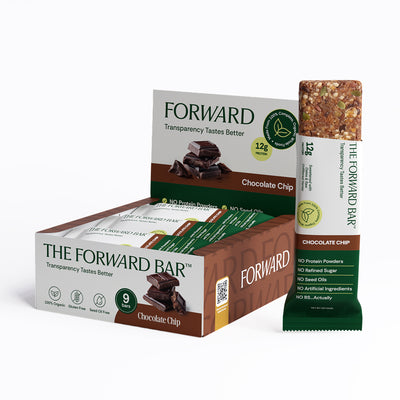
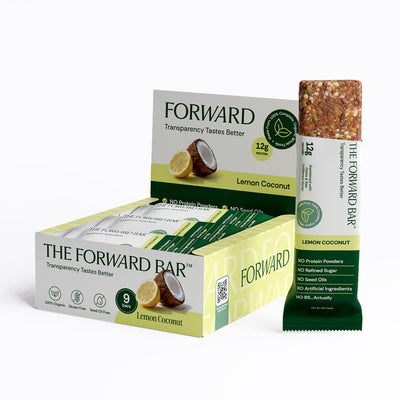
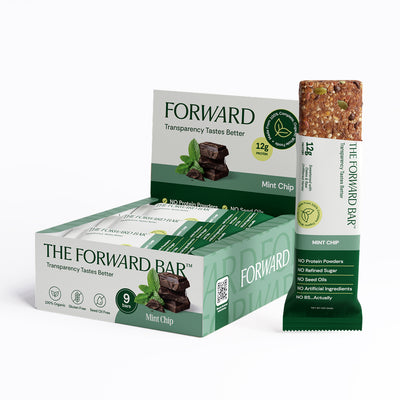
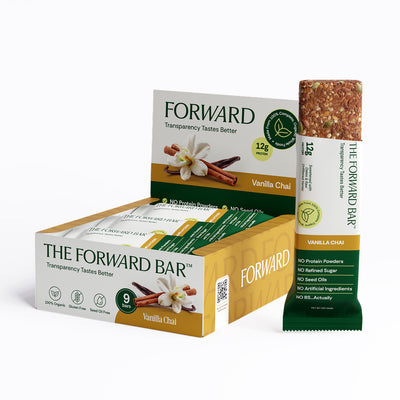
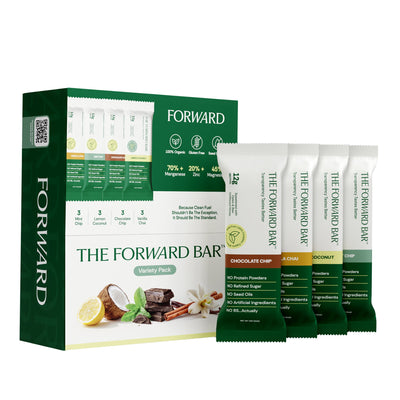
One Forward Bar delivers 45% of your daily magnesium — from pumpkin seeds, hemp seeds, and dates — the way your body was built to absorb it. You also get 12g of whole food protein, hours of real satiety, and something no supplement will ever offer: it's absolutely delicious.
Where the magnesium actually comes from
Every ingredient recognizable. Every one pronounceable. Magnesium that arrives the way nature intended.
45% daily magnesium.
12g protein. And it tastes
unbelievably good.
You've seen the research. You know what's in most supplements. Now close the gap with one bar — real magnesium, real protein, real food satisfaction. No pills required.
Shop The Forward Bar