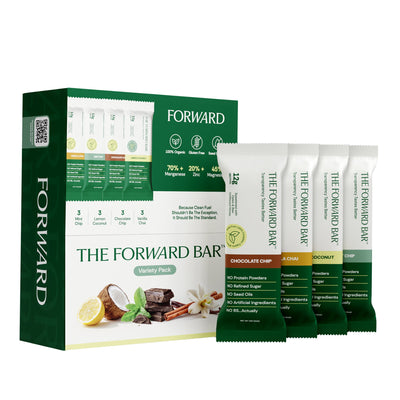


Pumpkin seeds — botanically Cucurbita pepo kernels, often sold as pepitas — are the single biggest reason The Forward Bar can put real minerals on its label without reaching for a synthetic vitamin premix.
Most protein bars that advertise a long vitamin list get those nutrients from a manufactured blend added at the mixing stage. We get ours from the seeds themselves. That is a slower, more expensive way to build a bar, and it is the whole point.
This page explains what pumpkin seeds actually contribute, what the published nutrition science says about those nutrients, and — just as importantly — what pumpkin seeds do not do.
Why we use them
Pumpkin seeds are recognized in USDA reference data as a notable food source of magnesium, zinc, iron, phosphorus, manganese and copper, along with plant protein and unsaturated fat.
That combination is unusual. Most single ingredients give you one or two minerals worth mentioning. Pumpkin seeds give you a cluster — which is what lets a whole-food bar compete on micronutrients at all.
They also bring a soft, slightly nutty texture that binds well with dates, so they do structural work in the recipe as well as nutritional work.
What the nutrition science says about these minerals
We are careful here, because it is easy to slide from “this food contains magnesium” into “this food will fix your health”. The honest version is narrower and more useful.
Magnesium is required for hundreds of enzyme reactions, including those involved in energy metabolizm, muscle and nerve function, and protein synthesis. The NIH Office of Dietary Supplements notes that magnesium intakes below the recommended amount are common in the United States.
Zinc is needed for normal immune function, protein synthesis and wound healing, and the body has no specialized zinc storage system — which is why regular dietary intake matters.
Iron in plant foods is non-heme iron, which is absorbed less efficiently than iron from meat. Vitamin C in the same meal improves absorption. We mention this because it is the kind of nuance a bar label will never tell you.
What they don't do
Two claims we deliberately avoid.
Pumpkin seeds are not a complete protein on their own. Seed proteins are generally limited in lysine relative to the reference pattern. In The Forward Bar they are combined with hemp seeds and almonds, and it is the combination — not any single seed — that improves the overall amino acid profile.
Pumpkin seeds are not a substitute for a blood test. If you suspect you are low in iron or zinc, the answer is a clinician and a lab panel, not a snack.
Pumpkin Seeds: common questions
Are pumpkin seeds a good source of magnesium?
Yes. USDA reference data lists pumpkin seed kernels among the more concentrated plant food sources of magnesium. The exact amount in a Forward Bar depends on our formulation — see the nutrition panel on the ingredients page for the per-bar %DV.
Do pumpkin seeds contain complete protein?
Not on their own. Seed proteins are typically lower in lysine relative to the reference amino acid pattern. The Forward Bar combines pumpkin seeds with hemp seeds and almonds, which together produce a more balanced profile than any one of them alone.
Are roasted pumpkin seeds less nutritious than raw?
Roasting has little effect on mineral content, since minerals are heat-stable. It can affect some heat-sensitive compounds and the fat's oxidative stability, which is why processing temperature and storage matter more than roasted-versus-raw as a category.
Sources
Every nutrient statement on this page is supported by one of the following. We cite institutional and peer-reviewed sources only.
- USDA FoodData Central U.S. Department of Agriculture Reference composition data for whole foods
- Magnesium — Fact Sheet for Health Professionals NIH Office of Dietary Supplements Magnesium's role and typical US intakes
- Zinc — Fact Sheet for Health Professionals NIH Office of Dietary Supplements Zinc's role in immune function and protein synthesis
- Iron — Fact Sheet for Health Professionals NIH Office of Dietary Supplements Non-heme iron absorption
- Daily Value on the Nutrition and Supplement Facts labels U.S. Food and Drug Administration How %DV is defined and calculated
Links last checked 2026-07-31. Nutrient amounts for The Forward Bar come from our own product testing and appear on the pack and on each product page.


