

When an ingredient list is short, recognizable, and easy to read, choosing food becomes less confusing. Instead of decoding a long panel of unfamiliar additives, you can focus on what matters most: the quality of the ingredients, how the food was made, and whether it fits your everyday wellness goals.
That is the heart of simple ingredient lists. They are not about perfection or restriction. They are about clarity. Whether you are shopping for protein bars, pantry snacks, or easy ingredient meals, a simpler label can help you make more confident choices.
1. They Make Food Choices Easier

One of the biggest benefits of simple ingredient lists is that they reduce decision fatigue. When a snack contains familiar foods like nuts, seeds, fruit, oats, honey, cacao, or spices, you can understand what you are eating without needing a chemistry lesson.
This matters because many snack aisles are full of products marketed as “healthy,” “high protein,” “low sugar,” or “better-for-you.” Those claims can be useful, but they do not tell the full story. The ingredient list often reveals more than the front of the package.
A practical rule: if you can recognize most of the ingredients and understand their purpose, the product is usually easier to evaluate.
2. They Support Better Label Reading
Learning how to choose snacks with simple ingredient lists starts with reading beyond the headline claims. Instead of stopping at calories, protein, or sugar grams, look at the ingredient panel in order.
Here is what to notice:
- First ingredients: These make up the largest portion of the product. In the U.S., ingredients are required to be listed in descending order by weight, so the items at the top of the panel matter most.
- Sweeteners: Look for recognizable options and note how many different sweeteners are used.
- Added fibers: Ingredients like chicory root fiber, soluble corn fiber, or resistant dextrin can affect digestion for some people.
- Emulsifiers and stabilizers: Ingredients such as gums, lecithins, and mono- and diglycerides may improve texture, but they can also signal more processing.
- Oils: Seed oils and refined oils are often used for texture, shelf life, or mouthfeel.
- Protein sources: Whole-food sources feel different from powders, isolates, and concentrates.
A long ingredient list is not automatically “bad,” and a short one is not automatically “good.” But a simple, understandable label gives you a clearer starting point.
3. They Put Ingredient Quality First
Simple ingredient lists encourage you to ask better questions. Instead of only asking, “How much protein does this have?” you can ask, “Where is the protein coming from?” Instead of only asking, “Is this low sugar?” you can ask, “What sweeteners are used?”
This shift is especially important with snacks and bars. Many bars rely on protein powders, sugar alcohols, syrups, added fibers, emulsifiers, and flavor systems to create a specific nutrition profile. Others use more whole-food ingredients to create a naturally satisfying texture and flavor.
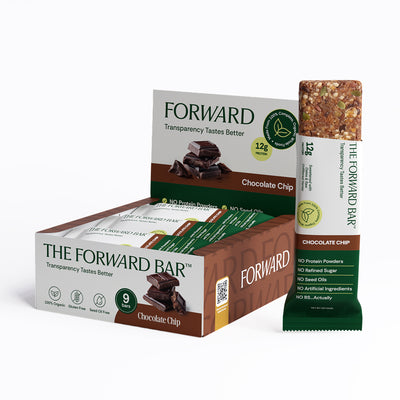
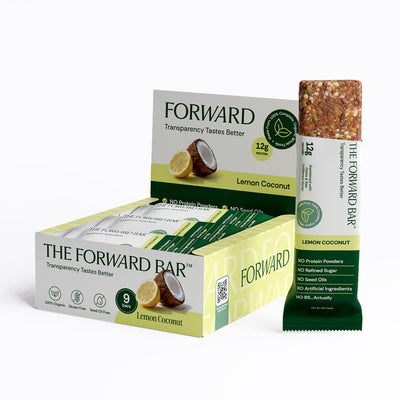
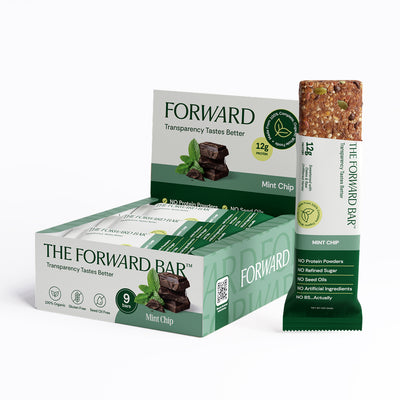
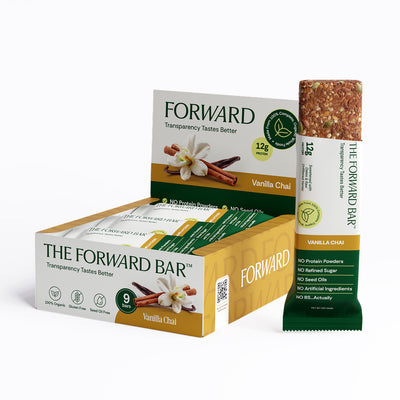
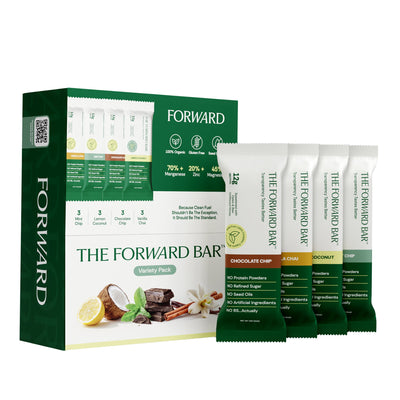
The Forward Bar perspective fits into this conversation by emphasizing whole-food ingredients and avoiding a reliance on powders or fillers. That approach is not about making every snack identical to something homemade. It is about keeping the ingredient list understandable and centered on foods people recognize.
"Natural flavors" as a catch-all. Natural flavors appear on many products sold as clean. The FDA definition of natural flavors includes a broad range of chemically derived compounds, as long as the original source was natural. The term tells consumers very little about what's actually in the product.
Minimalist design over processed ingredients. Earth tones, minimal typography, and clean-sounding language often appear on products made primarily from protein isolates. The aesthetics signal simplicity; the ingredients do not.
Short ingredient lists with low-quality items. Some bars achieve a short ingredient list not through whole foods but through a few processed compounds — protein isolate, tapioca syrup, palm oil. Short doesn't always mean real.
The clearest test for a genuinely clean protein bar: read every ingredient aloud and ask whether someone would add it to a homemade recipe, or whether it exists only to serve a manufacturing function.
4. They Can Help You Spot Ultra-Processed Markers
Ultra-processed foods often contain ingredients used primarily for texture, shelf stability, sweetness, color, or flavor intensity. These can include isolates, hydrolyzed proteins, artificial flavors, artificial sweeteners, refined starches, gums, and multiple emulsifiers. This category comes from the NOVA food classification framework, which groups foods by the extent and purpose of their processing. A 2024 umbrella review in The BMJ linked higher intake of ultra-processed foods to a range of adverse health outcomes.
Not every processed ingredient is harmful, and processing exists on a spectrum. Chopping almonds, drying fruit, roasting oats, or blending dates are all forms of processing. The key question is whether the processing supports the food or replaces the food. (For a plain-language overview, see Harvard's The Nutrition Source.)
For example, a snack bar made primarily with nuts, seeds, fruit, and a natural binder is very different from one built around protein isolates, syrups, sugar alcohols, and texture agents. Some research also suggests certain dietary emulsifiers may affect the gut microbiota, though much of this work is still in animal models. Both kinds of bars may be convenient. But they offer different ingredient stories.
5. They Make Snacks Feel More Like Real Food
The best snacks do more than fill a gap between meals. They should feel nourishing, satisfying, and grounded in real ingredients.
When shopping for protein bars with simple healthy ingredient lists, look for foods you might use in your own kitchen:
- Almonds, cashews, peanuts, or walnuts
- Pumpkin seeds, chia seeds, flaxseed, or sesame seeds
- Dates, figs, raisins, apples, or berries
- Oats, coconut, cacao, cinnamon, or sea salt
- Egg whites or other recognizable protein sources, when appropriate
You can compare the nutrient profiles of these whole foods using the USDA's FoodData Central database. This does not mean every ingredient must be raw or unprocessed. It means the product should feel food-forward rather than formula-forward.
6. They Pair Well With Minimal Ingredient Recipes
Simple packaged snacks can support the same mindset as minimal ingredient recipes. Both are about doing more with less: fewer fillers, fewer distractions, and more focus on flavor and quality.
For example, a simple snack plate might include:
- A bar made with nuts, seeds, and fruit
- Greek yogurt with berries
- Apple slices with nut butter
- Hard-boiled eggs with sea salt
- Oats with cinnamon and chopped nuts
These easy ingredient meals and snacks do not need long recipes or complicated prep. They work because the ingredients do the heavy lifting.
7. They Help You Compare Brands More Clearly

Many CPG brands with simple ingredient lists, clean label, easy-to-understand labeling, and transparent sourcing are responding to a real consumer need: people want to know what they are eating.
When comparing brands, do not rely only on the clean-looking package design. Use this quick checklist:
- Can you understand most ingredients without searching them?
- Are whole foods listed near the beginning?
- Are there multiple sweeteners in one product?
- Is the protein coming from food, powders, isolates, or concentrates?
- Are added fibers used to change the nutrition numbers?
- Are oils, gums, or emulsifiers central to the texture?
- Does the product still sound appealing if you ignore the front-of-pack claims?
This approach helps you choose based on substance, not just branding.
8. They May Be Easier on Digestion
Some people feel better with snacks that use fewer additives, sugar alcohols, and concentrated fibers. Ingredients like erythritol, maltitol, chicory root fiber, inulin, and soluble corn fiber can be useful in product formulation, but they may cause bloating or discomfort for sensitive individuals.
If you notice digestive changes after eating certain protein bars or low-sugar snacks, check whether the product contains a large amount of added fiber or sugar alcohols. A simpler ingredient list can make it easier to identify what works for your body.
This is not one-size-fits-all nutrition. It is about building awareness.
9. They Encourage More Mindful Sweetness
Sweeteners are one of the most important parts of any snack label. A product can be marketed as low sugar while still containing sugar alcohols, non-nutritive sweeteners, syrups, or concentrated fruit sweeteners. Federal guidance recommends keeping added sugars to less than 10% of daily calories, and the American Heart Association recommends stricter limits — no more than about 25g per day for women and 36g per day for men.
When evaluating sweetness, consider:
- Is sweetness coming from whole fruit, honey, maple syrup, dates, or another recognizable source?
- Are there several sweeteners listed together?
- Does the product taste extremely sweet despite low sugar numbers?
- Are sugar alcohols included, and do they agree with your digestion?
Simple ingredient lists make sweetness easier to understand because they usually rely on fewer sources.
10. They Build Trust Over Time
A clear ingredient list can create trust because it feels transparent. You do not have to guess why an ingredient is there. You can see the structure of the food.
For snack brands, this is especially valuable. People want convenience, but they also want confidence. A bar made with recognizable ingredients communicates a different kind of care than one that depends heavily on fillers, flavor systems, and highly modified components.
The Forward Bar point of view is rooted in that kind of clarity: whole-food ingredients, straightforward formulation, and no need to hide behind complicated label language. For consumers looking for protein bars with simple healthy ingredient lists, that perspective can make snack decisions feel simpler and more aligned with everyday wellness.
11. They Make Healthy Habits More Sustainable
Wellness should not require constant calculation. Simple ingredient lists help turn healthy eating into a repeatable habit because they make shopping, snacking, and meal building easier.
You do not need to memorize every additive or avoid every packaged food. Start with small, practical steps:
- Choose snacks with recognizable first ingredients.
- Limit products that rely on multiple sweeteners or fillers.
- Notice how added fibers and sugar alcohols make you feel.
- Look for protein sources you understand.
- Favor foods that resemble something you could make in your own kitchen.
Over time, these habits help you build a pantry that supports your body without overcomplicating your routine.
Best Sellers
Simple Ingredient Protein Bars


A Simple Final Takeaway
Simple ingredient lists are valuable because they bring food back into focus. They help you read labels with confidence, compare products more clearly, and choose snacks that prioritize ingredient and processing quality.
The next time you pick up a bar, snack, or packaged meal, turn it over. Read the ingredient list first. If it is clear, recognizable, and aligned with how you want to eat, that is a strong sign you are moving in the right direction.
Sources
- U.S. Food & Drug Administration — Ingredient labeling requirements (order by weight), 21 CFR 101.4. https://www.ecfr.gov/current/title-21/chapter-I/subchapter-B/part-101/subpart-A/section-101.4
- U.S. Food & Drug Administration — Definition of "natural flavor," 21 CFR 101.22. https://www.ecfr.gov/current/title-21/chapter-I/subchapter-B/part-101/subpart-A/section-101.22
- Monteiro CA, et al. "Ultra-processed foods: what they are and how to identify them." Public Health Nutrition, 2019. https://www.cambridge.org/core/journals/public-health-nutrition/article/ultraprocessed-foods-what-they-are-and-how-to-identify-them/E6D744D714B1FF09D5BCA3E74D53A185
- Lane MM, et al. "Ultra-processed food exposure and adverse health outcomes: umbrella review." The BMJ, 2024. https://www.bmj.com/content/384/bmj-2023-077310
- Harvard T.H. Chan School of Public Health, The Nutrition Source — "Processed Foods and Health." https://nutritionsource.hsph.harvard.edu/processed-foods/
- Chassaing B, et al. "Dietary emulsifiers impact the mouse gut microbiota promoting colitis and metabolic syndrome." Nature, 2015. https://www.nature.com/articles/nature14232
- Mayo Clinic — "Artificial sweeteners and other sugar substitutes." https://www.mayoclinic.org/healthy-lifestyle/nutrition-and-healthy-eating/in-depth/artificial-sweeteners/art-20046936
- Dietary Guidelines for Americans, 2020–2025. https://www.dietaryguidelines.gov/
- American Heart Association — "Added Sugars." https://www.heart.org/en/healthy-living/healthy-eating/eat-smart/sugar/added-sugars
- USDA FoodData Central. https://fdc.nal.usda.gov/


