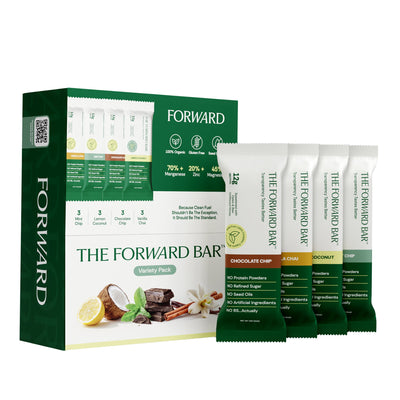


Almonds are the ingredient people are least surprised by and most likely to underestimate. They are one of the best-documented food sources of vitamin E, and they do a job in the bar that goes beyond their own nutrition.
Fat-soluble nutrients need fat to be absorbed. A bar built only from lean protein and fruit would list vitamins that your body struggles to use. The fat in almonds is part of why the rest of the formulation functions.
This page covers what almonds contribute, what vitamin E does, and why we treat fat as a feature rather than something to minimize.
Vitamin E, specifically alpha-tocopherol
Almonds are recognized in USDA reference data as one of the richest whole-food sources of vitamin E, in the alpha-tocopherol form that human tissue uses preferentially.
Vitamin E is a fat-soluble antioxidant that protects cell membranes from oxidative damage and contributes to normal immune function. The NIH Office of Dietary Supplements notes that most people in the United States do not meet the recommended intake from food alone — which makes a food source genuinely worth having.
Why the fat matters to the whole bar
Vitamin E, along with vitamins A, D and K, requires dietary fat for absorption. So do carotenoids.
This is the argument against the very-low-fat protein bar. You can print a long vitamin list on a fat-free bar and deliver less usable nutrition than a bar with nuts in it. The monounsaturated fat in almonds is doing absorption work, not padding the calorie count.
Almonds also contribute magnesium, plant protein and fiber, and they carry a natural crunch that keeps the bar from reading as uniformly soft.
The allergen point, stated plainly
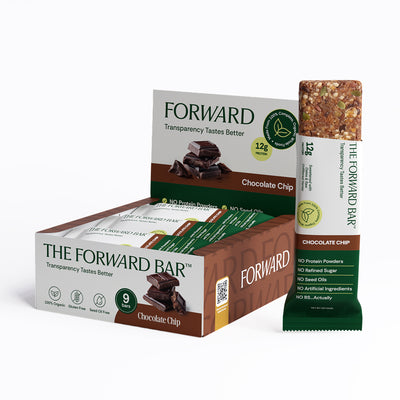
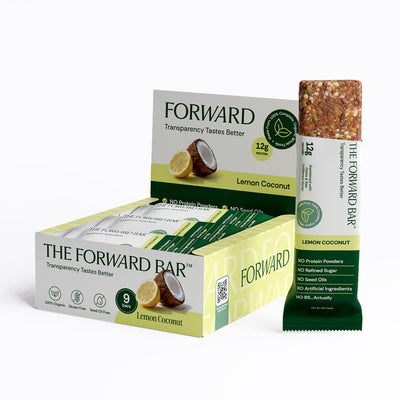
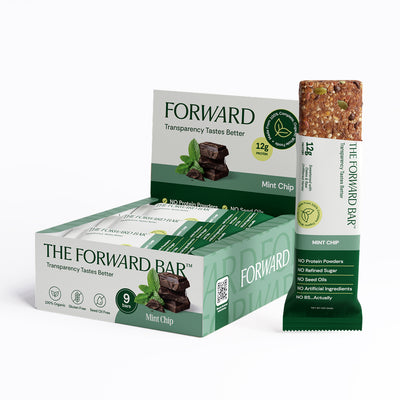
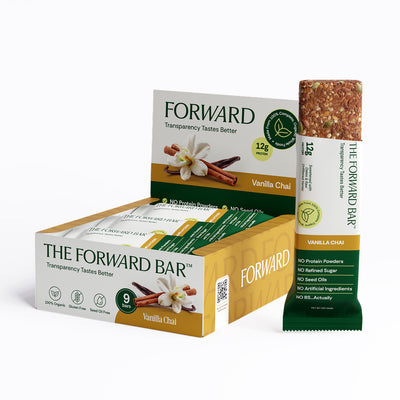
Almonds are a tree nut and one of the major allergens recognized under US labeling law. The Forward Bar contains almonds. If you have a tree nut allergy, this is not the bar for you, and no amount of clean-label positioning changes that.
Full allergen information appears on every pack and on each product page.
Almonds: common questions
Are almonds a good source of vitamin E?
Yes. USDA reference data lists almonds among the most concentrated whole-food sources of vitamin E as alpha-tocopherol, the form the body preferentially retains.
Does the fat in almonds make the bar less healthy?
The fat in almonds is predominantly monounsaturated and comes packaged with fiber, protein and micronutrients. It also enables absorption of the bar's fat-soluble vitamins. Fat content on its own is a poor proxy for how healthy a food is.
Does The Forward Bar contain nuts?
Yes — almonds. Almonds are a major allergen under US labeling law. Check the pack if you have a tree nut allergy.
Sources
Every nutrient statement on this page is supported by one of the following. We cite institutional and peer-reviewed sources only.
- USDA FoodData Central U.S. Department of Agriculture Reference composition data for whole foods
- Vitamin E — Fact Sheet for Health Professionals NIH Office of Dietary Supplements Alpha-tocopherol function and US intakes
- Magnesium — Fact Sheet for Health Professionals NIH Office of Dietary Supplements Magnesium's role
- The Nutrition Source Harvard T.H. Chan School of Public Health Evidence reviews on nuts, seeds, fats and fiber
- Daily Value on the Nutrition and Supplement Facts labels U.S. Food and Drug Administration How %DV is defined and calculated
Links last checked 2026-07-31. Nutrient amounts for The Forward Bar come from our own product testing and appear on the pack and on each product page.


