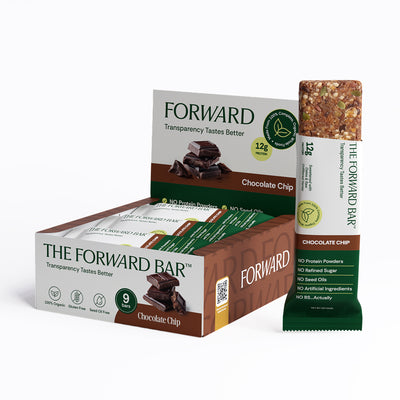
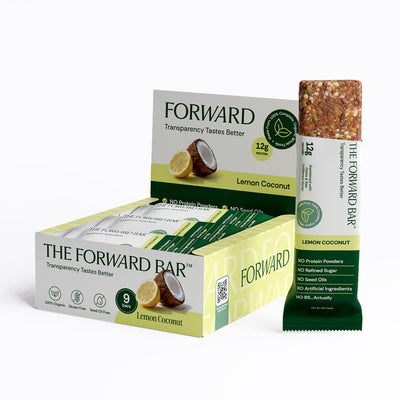
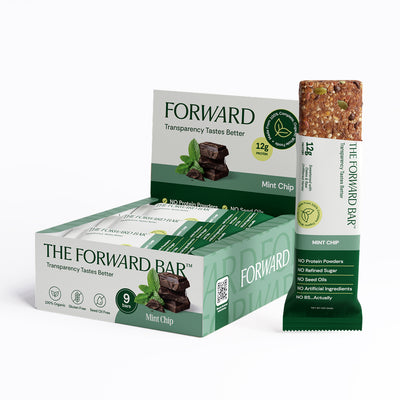
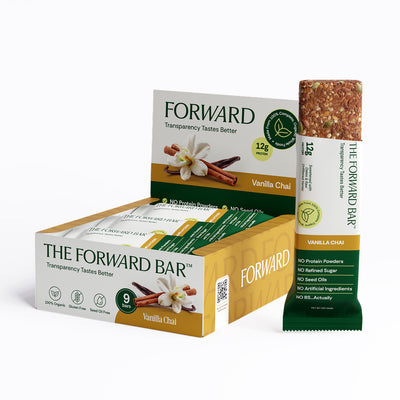
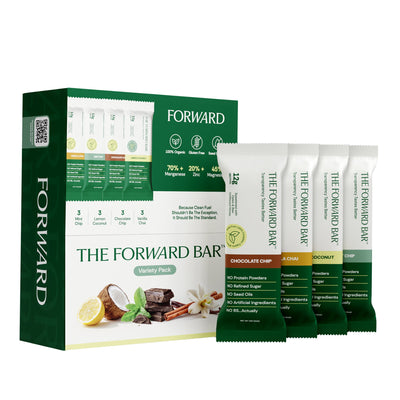


Barebells is the protein bar that tastes like a candy bar — and that's the whole appeal. It's indulgent, it packs 20g of protein, and it's a genuinely satisfying treat. But the reason it tastes like dessert is worth understanding: the label reads whey protein powder, sugar alcohols (maltitol), sucralose, seed oils, and artificial and natural flavors. Here's an honest, side-by-side look at how The Forward Bar and Barebells compare — including where Barebells legitimately wins.
What to Look For in a Protein Bar
Before the head-to-head, here is the lens we're using. When you evaluate any protein bar, look past the front of the pack and check five things on the ingredient list:
- Protein source — whole foods (nuts, seeds), or a processed protein powder or isolate (whey, soy, pea)?
- Sweetener — whole fruit like dates, or refined syrups, sugar alcohols, and artificial sweeteners?
- Fats — from whole nuts and seeds, or refined seed oils?
- Flavoring — real food, or artificial and "natural" flavors?
- Micronutrients — from the ingredients themselves, from a synthetic premix, or not at all?
A genuinely clean bar should read like food you recognize. Now let's compare.
The Forward Bar vs. Barebells
Barebells wins on protein quantity and dessert-like taste. The Forward Bar wins on nearly everything about the ingredient list.
| Category | The Forward Bar | Barebells |
|---|---|---|
| Protein | 12g | 20g |
| Protein source | Whole pumpkin & hemp seeds — no powder | Whey protein powder |
| 100% real food | Yes — seeds & dates | No — ultra-processed |
| Processed-powder-free | Yes | No — whey protein powder |
| Organic ingredients | Yes | No |
| Seed oil free | Yes — verified Seed Oil Safe | No — contains seed oils |
| No artificial or "natural" flavors | Yes — real-food flavoring | No — artificial & natural flavors |
| Refined-sugar free | Yes — dates & honey | Sweetened with maltitol, polydextrose & sucralose |
| Plant-based | Yes — vegetarian | No — animal-based (whey) |
| Omega-3 rich | Yes — hemp & flax | Minimal, if any |
| Whole-food fiber | Yes — psyllium, seeds, dates | No — polydextrose (added fiber) |
| Nutrient dense | Yes — whole-food minerals | Stripped & isolated |
Where Barebells Wins: Maximizing Protein for Recovery
We'll be straight about it: Barebells is the better protein-maximizing recovery bar, and The Forward Bar is the better everyday food bar. Two different goals, two different products. Barebells serves the first one well — 20g of whey isolate is engineered to push protein grams as high as one wrapper allows, and its candy-bar taste and texture make it easy to get down when you don't much feel like eating. If your training plan has you counting to a daily protein number, that's a real strength, and you should buy Barebells for it; we'd tell you the same thing in person.
But post-workout and protein-maximizing aren't the same thing. Most people eating a bar after a workout aren't chasing a gram target — they finished a run, a class, or a lift, and they want real food. The Forward Bar does that job well: 12g of complete protein from whole pumpkin and hemp seeds and almonds, all nine essential amino acids, and 45% DV magnesium from the seeds themselves rather than a synthetic premix.
It's built for these moments in particular:
- Breakfast on the move. Complete protein and whole-food fiber that hold you until lunch without the mid-morning crash.
- Before or after a workout. All nine essential amino acids, plus the magnesium your body needs to actually use them — and real carbohydrates from dates instead of the sugar alcohols that make so many people regret a diet bar mid-session.
- The 3pm slump. A low glycemic index (~35) means steady energy — not a sugar spike followed by a crash.
- Anywhere life takes you. No refrigeration, 12-month shelf life. It lives in a gym bag, a carry-on, or a glovebox.
Barebells also posts a very low sugar number. Worth knowing how, though: that number comes from sugar alcohols and sucralose, not from using less sweetness — which is exactly the trade-off the next section is about.
Where They Differ — Whole Food vs. Ultra-Processed
The gap shows up the moment you read the ingredient list. Barebells builds its 20g of protein from whey protein powder — a dairy isolate — and reaches its indulgent taste with maltitol, polydextrose, sucralose, seed oils, and artificial and natural flavors. It's engineered, and engineered well, but it's ultra-processed by any reasonable definition.
The Forward Bar is the opposite build: 12g of complete protein from whole pumpkin and hemp seeds and almonds — no powder — sweetened with dates and a little raw honey, bound with whole psyllium and seeds instead of refined oils, and flavored with real food. Fewer grams of protein, far more food.
Where They Differ — Sugar Alcohols & the Bloating Trade-off
That "low sugar" number on a Barebells wrapper comes largely from sugar alcohols like maltitol, plus sucralose. Sugar alcohols are a well-known cause of the bloating, gas and digestive discomfort people report from "diet" protein bars, because they ferment in the gut — and maltitol is a frequent offender.
The Forward Bar uses none of them. It's sweetened with whole dates and a little raw honey, so it never needs a sugar alcohol to fake a low number — and it lands at a low glycemic index (~35) with real, whole-food fiber that supports digestion rather than upsetting it.
Where They Differ — Seed Oils, Plant-Based & Micronutrients
- Seed oils: Barebells contains seed oils; The Forward Bar has none and is verified Seed Oil Safe by Seed Oil Scout.
- Plant-based: Barebells is whey-based, so it's an animal-protein bar; The Forward Bar is plant-based and vegetarian.
- Micronutrients: one Forward Bar is an excellent source of magnesium (45% DV), plus zinc, copper, manganese and phosphorus — all from mineral-dense seeds, no synthetic premix. A whey-and-sweetener bar isn't built to deliver those.
Here's What Matters
Barebells is a treat-forward, high-protein bar that tastes like candy — and if that's what you want, it delivers, with 20g of protein per bar. But it gets there the ultra-processed way: whey isolate, sugar alcohols, sucralose, seed oils, and artificial flavors.
The Forward Bar makes the opposite trade. It's whole food all the way down — protein from seeds, sweetened with dates, no sugar alcohols, no seed oils, real minerals from the ingredients — at 12g of protein. It's the choice when you want a snack that's genuinely made of food, not a candy bar in disguise.
And we'll stay honest about our limits: The Forward Bar contains almonds and raw honey (vegetarian, not vegan, not nut-free), and it's a whole-food snack, not a low-calorie diet bar or a full multivitamin.
Real Food, Not a Candy Bar
Try The Forward Bar


The Forward Bar vs. Barebells: FAQs
Are Barebells a healthy protein bar?
Barebells are high in protein and low in sugar, but they're ultra-processed: the protein is whey powder, and the low sugar number comes from sugar alcohols (like maltitol) and sucralose, alongside seed oils and artificial flavors. They're a good-tasting treat, but they're not a whole-food bar. The Forward Bar is built from whole seeds, almonds and dates instead.
Barebells has 20g of protein and The Forward Bar has 12g — isn't more better?
Not automatically. Barebells does have more protein, but it comes from whey protein powder. The Forward Bar's 12g is complete protein from whole seeds and almonds, with no powder. More protein from an isolate isn't the same as more nutrition from whole food — the source matters as much as the number.
Do Barebells contain sugar alcohols?
Yes — Barebells are sweetened with sugar alcohols such as maltitol, along with polydextrose and sucralose. Sugar alcohols are a common cause of bloating and digestive discomfort. The Forward Bar uses none; it's sweetened with whole dates and a little raw honey.
Are Barebells plant-based or vegan?
No. Barebells use whey protein, which is dairy-derived, so they're animal-based and not vegan. The Forward Bar is plant-based and vegetarian, with protein from seeds and almonds (it contains raw honey, so it's not vegan).
Do Barebells contain seed oils?
Yes, Barebells contain seed oils. The Forward Bar contains none and is verified Seed Oil Safe by Seed Oil Scout — its fats come from whole almonds, pumpkin seeds, hemp and flax.
Which is healthier, Barebells or The Forward Bar?
If you want the most protein in a dessert-like bar, Barebells wins on those two points. If "healthier" means whole-food protein with no powder, no sugar alcohols, no seed oils, plant-based, and real minerals from the food, The Forward Bar is the whole-food choice.