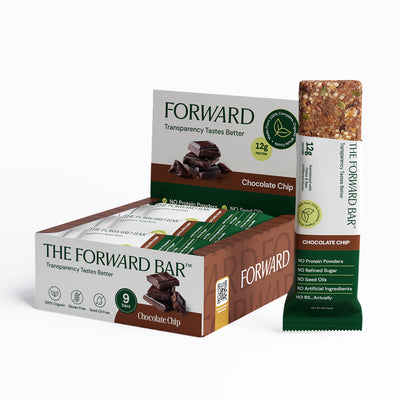
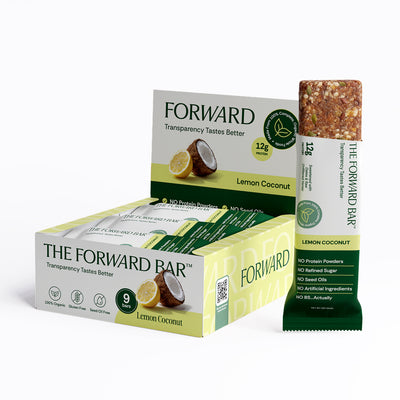
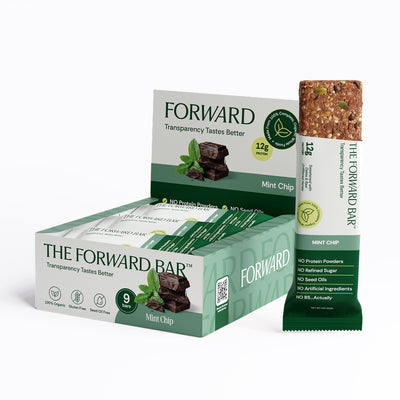
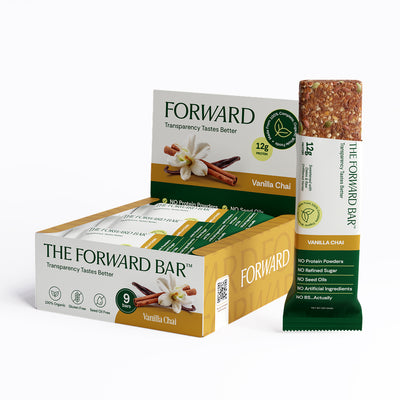
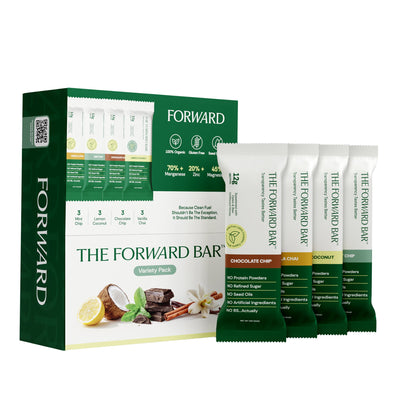


Which protein bars don't cause bloating? Bars without sugar alcohols (erythritol, maltitol, sorbitol, xylitol), without concentrated added fibers (chicory root fiber, inulin, soluble corn fiber) and without artificial sweeteners are the least likely to cause gas. No bar is guaranteed to suit every stomach, and that includes ours.
This guide shows what to look for on the label, how to read a bar against the four usual culprits, and where Forward Bar can still cause trouble.
What Causes Bloating from a Protein Bar
Bloating usually comes from something in the bar that reaches your large intestine undigested, where gut bacteria ferment it and produce gas. Four ingredients account for most complaints.
1. Sugar alcohols
Erythritol, maltitol, sorbitol and xylitol let a bar show a tiny sugar number while still tasting sweet. They are only partly absorbed, and the rest ferments in the gut. Maltitol and sorbitol also have a laxative effect.
Check the label for: any "-itol" ingredient, or a "sugar alcohol" line on the nutrition panel.
2. Added isolated fibers
Chicory root fiber (inulin), soluble corn fiber and isomalto-oligosaccharides are used to push the fiber number up and the net carb number down. In concentrated doses they ferment quickly.
Check the label for: "chicory root fiber," "inulin," "soluble corn fiber," "tapioca fiber," "IMO."
3. Artificial sweeteners
Sucralose and similar sweeteners are common in "low sugar" bars. Their effect on digestion varies from person to person.
Check the label for: sucralose, aspartame, acesulfame potassium.
4. Large loads of fermentable sugars and fiber
Whole foods can cause gas too, especially when you eat a lot of fiber you aren't used to. Honey and some dried fruit contain fermentable sugars (FODMAPs), and any high-fiber snack can cause gas if you go from low fiber to high fiber overnight.
Check: the serving size, and how much fiber the bar has.
Reading a Label for the Four Culprits
Here is how to read any bar against the four culprits above, with Forward Bar's own label as the worked example. This is a label reading, not a claim about how any bar will feel for you.
| Check | What to look for | Forward Bar |
|---|---|---|
| Sugar alcohols | Any "-itol" ingredient, or a sugar alcohol line on the panel | None |
| Added isolated fibers | Chicory root fiber, inulin, soluble corn fiber, tapioca fiber, IMO | None. No inulin or chicory root fiber |
| Sweetener source | Sucralose, aspartame, acesulfame potassium, or sweetener blends | Dates and a little raw honey (2g added sugar) |
| Protein source | Protein powders and isolates | Pumpkin seeds, hemp seeds, almonds (12g, no protein powder) |
| Fiber | Total fiber grams and where the fiber comes from | 4g whole-food fiber, including psyllium, flax and dates |
For a broader label test that covers protein source, oils and sweeteners, see The Healthiest Protein Bars: How to Judge One.
How Popular Bars Compare
We read the ingredient list and nutrition panel of one flavor per brand, taken from each brand's own product page on October 16, 2026. This is a label comparison, not a claim about how any bar will feel for you.
| Bar (flavor checked) | Sugar alcohols / added isolated fibers | Sweeteners · protein · fiber |
|---|---|---|
| Forward Bar | None / None | Dates and a little raw honey (2g added sugar) · 12g from pumpkin seeds, hemp seeds, almonds · 4g fiber |
| GoMacro MacroBar (Peanut Butter Chocolate Chip) | None / None | Brown rice syrup, coconut sugar (7g added sugar) · 11g from brown rice and pea protein, peanuts · 2g fiber |
| RXBAR (Chocolate Sea Salt) | None / None | Dates (0g added sugar) · 12g from egg whites, cashews, almonds · 5g fiber |
| Jacob Bar (Chocolate) | None / Tapioca fiber | Honey, dates (9g added sugar) · 20g from whey and milk protein isolates, whey concentrate, collagen · 9g fiber |
| ALOHA (Chocolate Chip Cookie Dough) | None / Tapioca fiber | Tapioca syrup, cane sugar, brown sugar, brown rice syrup (4g added sugar) · 14g from brown rice and pumpkin seed protein · 10g fiber |
| Barebells, US (Cookies & Cream) | Maltitol, 5g / Polydextrose | Maltitol, sucralose (0g added sugar) · 20g from milk proteins, collagen, soy protein isolate · 3g fiber |
| Quest (Chocolate Chip Cookie Dough) | Erythritol, 6g / Polydextrose | Erythritol, stevia, sucralose (0g added sugar) · 21g from milk and whey protein isolates · 12g fiber |
Formulations change and differ between flavors and countries. Check the current label before you buy. Competitor information is taken from public labels on the date shown.
Where Forward Bar Can Still Cause Gas
We would rather tell you than have you find out. Forward Bar has no sugar alcohols, no inulin or chicory root fiber and no protein powder. That does not make it right for every stomach.
Fiber. Each bar has 4g of whole-food fiber, including soluble fiber from psyllium and flax. Many people find it supports digestion. If you are not used to much fiber, start with half a bar, drink water with it and build up. A sudden fiber increase can cause gas from any food.
Dates and honey. Dates and raw honey sweeten the bar. Both contain fermentable sugars. If you follow a strict low-FODMAP diet, check serving sizes against current Monash University data and ask your dietitian before you add the bar.
Nuts and honey. The bar contains almonds (a tree nut) and raw honey. It is not nut-free and not suitable for children under 12 months.
Energy. Bars are 260 to 280 calories because whole nuts and seeds are energy-dense. This is a whole-food snack, not a low-calorie diet bar and not a replacement for a full meal.
You can see every ingredient and why it is there on our ingredients page.
How to Choose a Bar That Sits Well
- Read the ingredient list, not the front of the pack. "Only 1g sugar" often means sugar alcohols.
- Look for any "-itol" ingredient. If you find one, put the bar back.
- Look for added fibers. Inulin, chicory root fiber, soluble corn fiber and tapioca fiber are the usual ones.
- Prefer a short list of foods you recognize. Fewer ingredients make it easier to work out what bothers you.
- Start small. Try half a bar the first time, away from a workout or a long meeting.
- Keep a note. If a bar bothers you, write down the bar, the amount and the time. Patterns show up quickly.
Frequently Asked Questions
Why do protein bars make me bloated?
Most bloating comes from sugar alcohols, concentrated added fibers like inulin and chicory root fiber, artificial sweeteners, or a large amount of fermentable sugar. These pass through undigested and ferment in the large intestine, producing gas. A sudden jump in fiber can have the same effect.
Are sugar alcohols the main cause of bloating from protein bars?
They are one of the most common causes. Erythritol, maltitol, sorbitol and xylitol are only partly absorbed. Maltitol and sorbitol are the most likely to have a laxative effect. Check the label for any ingredient ending in "-itol."
Is psyllium fiber bad for bloating?
Not for everyone. Psyllium is a soluble fiber that many people find supports digestion and regularity. Like any fiber, it can cause gas if you add a lot quickly. Forward Bar has 4g of whole-food fiber per bar, including psyllium, so try half a bar first and drink water.
Are dates and honey low FODMAP?
Both contain fermentable sugars, and tolerance depends on serving size. Forward Bar is sweetened with dates and a little raw honey, so people on a strict low-FODMAP diet should check current Monash University guidance and talk to a dietitian first.
Does Forward Bar contain sugar alcohols, inulin or chicory root fiber?
No. Forward Bar has no sugar alcohols, no inulin or chicory root fiber, no protein powder, no seed oils and no refined sugar.
Are RXBAR and GoMacro bars OK for sensitive stomachs?
Going by their current labels (checked October 2026), neither RXBAR Chocolate Sea Salt nor GoMacro Peanut Butter Chocolate Chip contains sugar alcohols or added isolated fibers. RXBAR is sweetened with dates; GoMacro with brown rice syrup and coconut sugar. Ingredients vary by flavor, and how a bar sits depends on you, so read the current label and start with a small amount.
Can I eat protein bars if I have IBS?
Many people with IBS react to sugar alcohols, inulin and large amounts of fermentable sugars, so those are the first things to avoid. IBS varies a lot from person to person. Talk to your doctor or a registered dietitian before you add a new food.
What is the easiest protein bar to digest?
There is no single answer. Bars with a short ingredient list made of foods you recognize, no sugar alcohols and no added isolated fibers are a sensible place to start, and a small first serving helps you see how a bar sits with you.
Sources
Competitor labels checked October 16, 2026.
- Peanut Butter Chocolate Chip MacroBar GoMacro
- Chocolate Sea Salt RXBAR RXBAR
- Jacob Protein Bar Jacob
- Chocolate Chip Cookie Dough Protein Bars ALOHA
- Cookies & Cream Protein Bar (US) Barebells
- Chocolate Chip Cookie Dough Protein Bar Quest Nutrition


