

Search “the healthiest protein bar” and you’ll get a hundred ranked lists, most of them disagreeing with each other. That’s because “healthiest” isn’t a single spec you can measure — it depends on what you’re eating the bar for. But there is a reliable way to judge one, and it takes about fifteen seconds with the ingredient list.
This guide gives you that test: five things to check on any label, why each one matters, and the traps that let an ultra-processed bar market itself as health food. We’ll be honest about where our own bar lands, too — including what it doesn’t do.
First, What “Healthy” Actually Means for a Protein Bar

A protein bar is a snack, not a supplement or a meal. So a healthy one isn’t about hitting some magic number — it’s about whether the bar delivers real nutrition without dragging along the things that make processed food processed: refined isolates, added sugars, sugar alcohols, refined oils, and synthetic fillers.
The best way to see through the marketing is to stop reading the front of the pack — the “20g protein!” and “only 1g sugar!” claims — and read the ingredient list instead. That’s where a bar tells the truth about itself.
The 5-Point Label Test

1. Where does the protein come from?
This is the single most revealing line on the label. Most bars reach a high protein number the cheapest way possible: whey, soy, or pea protein isolate — protein powder, stripped from its original food and concentrated.
A genuinely whole-food bar earns its protein from whole foods — nuts and seeds. That’s harder and more expensive to formulate, which is exactly why it’s rare. Hemp seeds are one of the few plant foods containing all nine essential amino acids, so a bar built on hemp, pumpkin seeds and almonds can deliver complete protein with no powder at all.
What to look for: protein from named whole foods near the top of the list. Red flag: “protein blend,” “isolate,” or “concentrate.”
2. How is it sweetened — and how much?
“Low sugar” on the front can mean two very different things. Some bars are genuinely low in sugar because they’re sweetened with whole fruit; others hit a low sugar number by using sugar alcohols or artificial sweeteners (more on those below).
The healthiest sweetening is whole food — dates, a little raw honey — which brings fiber and minerals along with the sweetness, rather than a refined syrup (brown rice syrup, tapioca syrup, agave) that spikes blood sugar.
What to look for: dates, fruit, small amounts of honey; low added sugar. Red flag: syrups high on the list, or a suspiciously low sugar number achieved with sugar alcohols.
3. Does it use sugar alcohols?
This is the trap behind most “1g sugar” protein bars. Sugar alcohols — erythritol, maltitol, xylitol, sorbitol — let a bar post a tiny sugar number while still tasting sweet. The problem: they’re a well-known cause of the bloating, gas and digestive discomfort people report from “diet” protein bars, because they ferment in the gut. Maltitol is a particular offender.
A healthy bar doesn’t need them. If it’s sweetened with real food, it never has to reach for a sugar alcohol to fake a number.
What to look for: no sugar alcohols listed. Red flag: any “-itol” ingredient, or a “sugar alcohol” line on the nutrition panel.
4. What fats are in it — and are they whole?
Fat isn’t the enemy in a protein bar; refined fat is the thing worth avoiding. The cheapest bars bind and soften with extracted seed oils — canola, soybean, sunflower, or an unnamed “vegetable oil.”
The whole-food alternative is fat that’s still inside its original food: the natural oils in almonds, pumpkin seeds, hemp and flax, which arrive packaged with fiber, protein and minerals rather than as an isolated, industrially refined oil. (Worth knowing: whole seeds are not seed oil — “seed oil” specifically means oil extracted and refined out of the seed.)
What to look for: fat from whole nuts and seeds. Red flag: canola, soybean, sunflower, or “vegetable oil.” Third-party verification like Seed Oil Scout is a strong signal here — see our seed oil-free protein bars.
5. Where do the vitamins and minerals come from?
Plenty of bars advertise a long vitamin list. Read closely and you’ll often find a synthetic vitamin premix — the same fortification added to processed cereal — rather than nutrients from the ingredients themselves.
Whole-food micronutrients come built into real ingredients: pumpkin seeds are naturally rich in magnesium and zinc, for instance. It’s a smaller, more honest list, but it’s food, not fortification.
What to look for: minerals that come from the named whole-food ingredients. Red flag: a long added-vitamin blend on an otherwise short bar.
The Test at a Glance
Five checks, and what each one looks like on a label that’s telling the truth versus one that isn’t.
| What to check | Green flag | Red flag |
|---|---|---|
| Protein source | Named whole foods near the top of the list — seeds, nuts | “Protein blend,” “isolate,” or “concentrate” |
| Sweetener | Dates, fruit, a small amount of raw honey; low added sugar | Brown rice, tapioca or agave syrup high on the list |
| Sugar alcohols | None listed | Any “-itol” ingredient, or a sugar alcohol line on the panel |
| Fats | Fat from whole nuts and seeds, still inside the food | Canola, soybean, sunflower or unnamed “vegetable oil” |
| Vitamins & minerals | Minerals that come from the named ingredients | A long added-vitamin premix on an otherwise short bar |
No single line disqualifies a bar on its own — but a label that trips three or more of these is a processed snack wearing health-food packaging.
A Quick Honest Word on the Front-of-Pack Numbers
Two numbers get gamed constantly:
- “20g+ protein” usually means isolate. More protein isn’t automatically healthier — the source matters more than the number.
- “1g sugar” usually means sugar alcohols or a lot of refined-fat calories replacing the sugar. A bar sweetened with dates might show 10–13g of sugar and be the healthier choice, because it’s whole-food sugar packaged with fiber.
The healthiest bar is rarely the one with the most extreme numbers. It’s the one whose ingredient list you’d actually recognize as food.
How The Forward Bar Scores on Its Own Test

We’ll hold ourselves to the same five points:
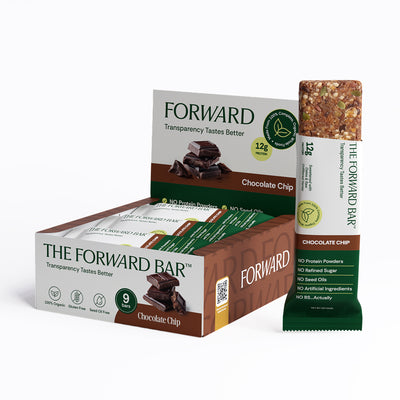
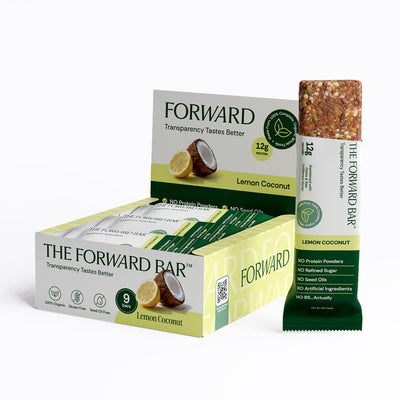
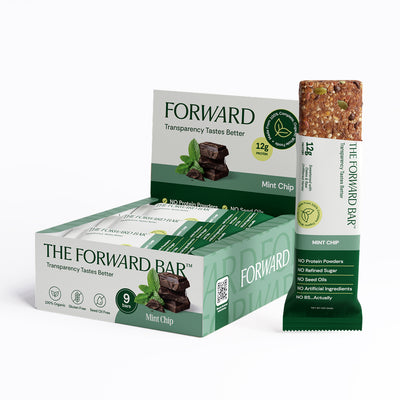
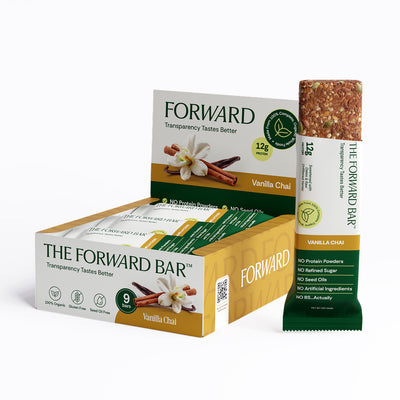
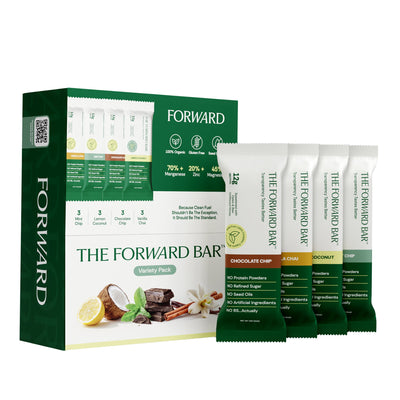
- Protein source: 12g of complete protein from pumpkin seeds, hemp and almonds — no protein powder, no isolates.
- Sweetening: dates and a little raw honey; no refined sugar (2g added sugar), no syrups.
- Sugar alcohols: none.
- Fats: whole-food fats from nuts and seeds; no seed oils — verified Seed Oil Safe by Seed Oil Scout.
- Micronutrients: from the food itself — an excellent source of magnesium (45% DV), manganese, copper, phosphorus and zinc — with no synthetic vitamin premix.
Seven whole-food ingredients, made in a USDA-organic facility and certified kosher by EarthKosher.
And Here’s What It Isn’t
A healthy bar shouldn’t overpromise, so:
- It’s not a low-calorie “diet” bar — it’s 260–280 calories, because whole nuts and seeds are energy-dense. Great as a filling snack that replaces something worse; not a magic weight-loss food.
- It’s not a full multivitamin — it’s light on vitamin D, B12, calcium and iodine, which come from elsewhere in your diet.
- It contains almonds and honey, so it’s vegetarian, not vegan, and not nut-free.
We’d rather tell you that than imply a bar does everything.
The Bottom Line
There’s no single “healthiest protein bar” — but there’s a healthiest bar for you, and you can spot it in fifteen seconds: real-food protein, whole-food sweetening, no sugar alcohols, no seed oils, and nutrients from the ingredients rather than a premix. Judge every bar (ours included) by what’s actually on the label, and the marketing stops mattering.
Best Sellers
The Healthiest Protein Bars


Frequently Asked Questions
What makes a protein bar healthy?
A healthy protein bar delivers real nutrition without ultra-processed shortcuts. The clearest signals are on the ingredient list: protein from whole foods rather than isolates, sweetening from fruit rather than syrups or sugar alcohols, fats from whole nuts and seeds rather than refined seed oils, and micronutrients from the ingredients rather than a synthetic vitamin premix. A short, recognizable ingredient list beats a long one almost every time.
Is a protein bar with more protein always healthier?
No. A higher protein number usually just means more isolate or protein powder, which is the cheapest way to raise it. The source of the protein matters more than the quantity — 12g of complete protein from seeds and nuts is more whole-food than 20g from an isolate.
Are “1g sugar” protein bars actually healthier?
Not necessarily. Many reach that number with sugar alcohols (like maltitol or erythritol), which commonly cause bloating, or by replacing sugar with refined-fat calories. A bar sweetened with whole dates may list more sugar on paper while being the less processed, more filling choice.
Which protein bars are healthiest for weight loss?
For weight loss, look for high satiety with whole-food ingredients: real protein, fiber, and a low glycemic response, without sugar alcohols or high added sugar — and use the bar to replace a less nutritious snack rather than add to your day. No bar causes weight loss on its own; it has to fit your overall calories.
What is the healthiest protein bar?
There’s no single answer — it depends on your goal — but the healthiest bars share the same traits: whole-food protein (no powder), no sugar alcohols, no refined sugar, no seed oils, and micronutrients from real ingredients. The Forward Bar is built to meet all five, from 8-10 whole-food ingredients.


