

Short answer: A minimally processed snack bar is made from whole foods that are mixed or pressed with little else added. A processed bar adds familiar culinary ingredients such as sugar, oil, or salt. An ultra-processed bar is an industrial formulation built from isolated components and additives you would not use in a home kitchen, such as protein isolates, emulsifiers, and flavor enhancers.
Researchers sort foods this way using the NOVA classification, developed by Brazilian researchers in 2009. This guide applies NOVA to snack bars and gives you a five-question checklist to use on any label. For why the category matters, read our essay The Problem with Ultra-Processed Protein Snacks.
The Four NOVA Categories, Applied to Snack Bars
NOVA has no official "snack bar" category, so the examples below are our application of the system to bars. No group is rated good or bad by NOVA itself.
| NOVA group | What it means | Snack bar example |
|---|---|---|
| 1. Unprocessed or minimally processed | Whole foods, possibly washed, dried, roasted, or frozen, with no added ingredients | Plain almonds, dried dates, or a bar pressed only from nuts and fruit (e.g. a date and nut bar with no added ingredients) |
| 2. Processed culinary ingredients | Oils, butter, sugar, salt, and honey, used in cooking | Honey or oil used as a binder (an ingredient, not a bar) |
| 3. Processed foods | Group 1 foods combined with group 2 ingredients through cooking or preservation | A granola bar made from oats, honey, oil, and salt |
| 4. Ultra-processed | Industrial formulations with additives rare or absent in home cooking: emulsifiers, hydrogenated oils, synthetic colors, flavor enhancers | A bar made with protein isolate, sugar alcohols, soy lecithin, and "natural flavors" |
Note that the line between groups 1, 3, and 4 depends on the ingredient list, not the protein count or the front-of-pack claim.
Where "Clean-Label" Fits
"Clean-label" is a marketing term with no regulatory definition. NOVA classifies by processing, so a bar can have a short, friendly ingredient list and still be ultra-processed (for example, a short list built on a protein isolate). Use the checklist below instead of the claim.
For more on how the term gets used, see our guide to what "clean" actually means for protein bars.
The 5-Question Processing Checklist
- Where does the protein come from? Whole seeds and nuts, or isolates and powders (whey, pea, soy, egg white powder)?
- Is there an emulsifier or stabilizer? Look for soy lecithin, mono- and diglycerides, and gums.
- What provides the flavor? Real ingredients (cocoa, vanilla, lemon), or "natural flavors" and artificial flavors?
- What provides the sweetness? Whole-food sweeteners such as dates or honey, or refined sugar, syrups, sugar alcohols, and sweetener blends?
- Which fat is used? Fat from the nuts and seeds themselves, or added refined oils (canola, soybean, sunflower, safflower)?
Ingredients That Signal Ultra-Processing in Bars
- Protein isolates and powders: protein extracted from milk, peas, soy, or eggs and concentrated industrially.
- Emulsifiers (soy lecithin, mono- and diglycerides): improve texture and shelf life; rarely used in home cooking.
- Sugar alcohols and sweetener blends: used to lower sugar while keeping sweetness.
- Refined seed oils: heavily processed fats used for cost and shelf stability.
- "Natural flavors": flavor compounds isolated or engineered rather than coming from the named ingredients.
- Synthetic vitamin premix: added nutrients rather than nutrients from the food itself.
How a Forward Bar Fits the Checklist
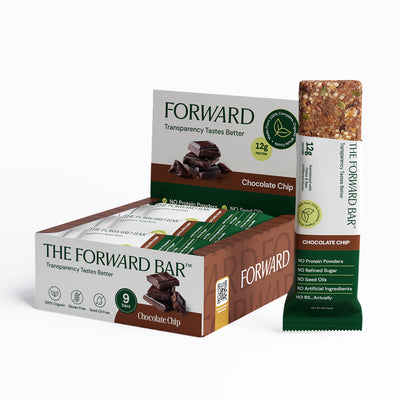
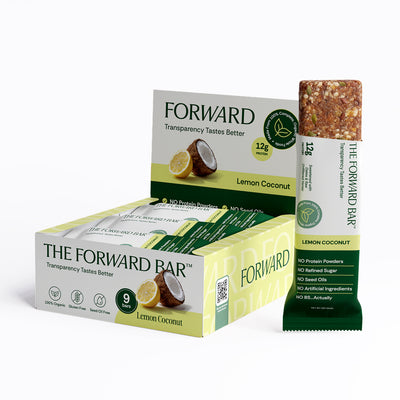
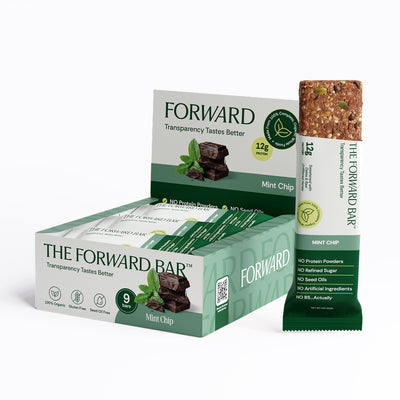
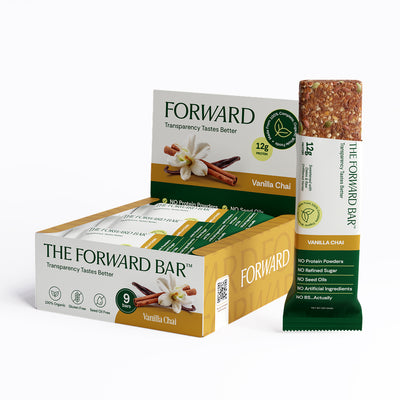
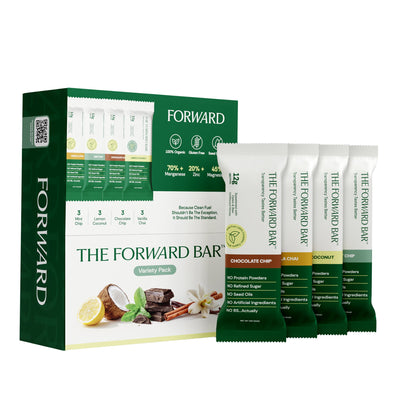
Forward Bar is USDA Certified Organic and made in the USA. Protein comes from whole pumpkin seeds, hemp, flax, and almonds, with no protein powder or isolates. It has no refined sugar (it is sweetened with dates and raw unfiltered honey), no seed oils, no sugar alcohols, and no natural flavors, because the flavor comes from the ingredients themselves.
For comparison, RXBAR also has 12g of protein, but it uses egg white powder and natural flavors.
Honest limits: the bars contain almonds and raw honey, so they are not suitable for people with tree nut allergies or for vegans who avoid honey. They contain sugar from dates and honey. They are a whole-food snack, not a low-calorie diet bar, not a full multivitamin, and not built to maximize protein. A bar like Barebells is better suited to that goal.
Frequently Asked Questions
What is the difference between processed and ultra-processed snacks?
Processed snacks combine whole foods with simple culinary ingredients like salt, sugar, or oil. Ultra-processed snacks are industrial formulations containing additives and isolated ingredients that are rare or absent in home cooking.
Is a protein bar ultra-processed?
It depends on the ingredients. Many bars use protein isolates, emulsifiers, sugar alcohols, and flavor additives, which are markers of ultra-processed food. A bar built from whole seeds, nuts, and fruit with no isolates or additives sits closer to minimally processed. Check the label with the 5-question checklist.
How processed is a snack bar?
Check the ingredient list. The more isolated components and additives, the more processed it is. Protein grams do not change the classification.
Are all ultra-processed foods bad for you?
Not necessarily. UC Davis researchers note most studies are observational and show association, not causation, and that some ultra-processed foods (infant formula, emergency rations) serve valid purposes. The concern is when they become most of the diet.
Does "natural flavors" mean a bar is minimally processed?
No. Natural flavors are flavor compounds that do not come from the named ingredients in the bar itself, and they are typically a marker of industrial formulation.
Does a short ingredient list mean a bar is not ultra-processed?
Not always. A short list can still be built on an isolate. Look at what the ingredients are, not how many there are.
Sources
- What to Know About Processed and Ultra-Processed Food UC Davis
- Ultra-processed foods, diet quality, and health using the NOVA classification system Food and Agriculture Organization of the United Nations (FAO) Monteiro CA, Cannon G, Lawrence M, Costa Louzada ML, Pereira Machado P. Rome, 2019.
- The Problem with Ultra-Processed Protein Snacks The Forward Bar


