

Protein has officially become a marketing tool.
Walk into any grocery store and you’ll see:
- High-protein waffles
- High-protein donuts
- High-protein cereals
- High-protein cookies
- High-protein chips
But here’s the real question:
Since when did waffles and donuts become health foods, just because they have more protein?
Adding protein powder to ultra-processed food doesn’t automatically make it nourishing. In many cases, it simply turns a highly engineered snack into a highly engineered snack with better branding.
At The Forward Bar, we believe protein quality matters, but so does ingredient integrity. And that’s where many “protein snacks” fall short.
What Does “Ultra-Processed” Actually Mean?
Ultra-processed foods are products made primarily from industrial ingredients rather than whole foods.
They typically contain:
- Refined flours
- Protein isolates
- Emulsifiers
- Artificial flavors
- Refined seed oils
- Stabilizers
- Preservatives
- Sugar substitutes
These products are formulated for:
- Long shelf life
- Hyper-palatable taste
- Low manufacturing cost
- Consistent texture
They are not built primarily for nutritional integrity.
When a waffle is reconstructed from refined flour, protein isolate, artificial flavor, and canola oil, it doesn’t become a whole food just because it hits 15 grams of protein.
Protein Count Isn’t the Whole Story
We’ve been trained to focus on macros, especially protein grams.
But here’s the reality:
Two snacks can each contain 15 grams of protein, yet be fundamentally different.
One might come from:
- Whole seeds
- Natural binders
- Real food ingredients
The other might come from:
- Whey protein isolate
- Pea protein isolate
- Refined flour
- Artificial sweeteners
- Emulsifiers
- The protein number is the same.
The ingredient integrity is not.
Protein does not cancel out processing.
The Waffle & Donut Illusion
Let’s talk about it.
A “high-protein donut” is still a donut.
A “high-protein waffle” is still a waffle.
If it’s made from refined flour, seed oils, emulsifiers, and artificial flavoring, it remains a highly processed food, even if protein powder is added.
Marketing has blurred the line between indulgence and nourishment.
Protein has become a health halo.
But adding protein powder to ultra-processed foods is often a cosmetic upgrade, not a structural one.
If the base is still:
- Refined flour
- Industrial oils
- Chemical stabilizers
Then the product hasn’t fundamentally changed.
It’s just been repositioned.
The Hidden Ingredients in Protein Snacks
Here are common additives found in ultra-processed protein snacks:
Emulsifiers
Used to improve texture and shelf life. Examples include soy lecithin and mono- and diglycerides. They help blend fats and water but are rarely ingredients you’d use at home.
Refined Seed Oils
Canola, soybean, sunflower, and safflower oils are inexpensive and shelf-stable but heavily processed using high heat and chemical solvents.
Artificial or “Natural” Flavors
Engineered compounds designed to mimic taste rather than derive from real ingredients.
Protein Isolates
Concentrated protein extracted from milk or plants using industrial processes. While efficient, they’re far removed from whole food sources.
Stabilizers & Thickeners
Ingredients added to maintain structure and prevent separation over time.
When stacked together, these components create a product optimized for manufacturing, not simplicity.
Why Processing Matters
Ultra-processing changes how food behaves in the body.
When ingredients are refined, isolated, and reconstructed, they lose their natural matrix, the combination of fiber, fat, and micronutrients that regulate digestion and absorption.
Highly processed foods are often:
- Easier to overeat
- Faster to digest
- Less satiating
- Designed to be hyper-palatable
Adding protein powder doesn’t restore the lost structure of whole food.
It just increases one macronutrient number.
Whole Food Protein vs Engineered Protein Snacks
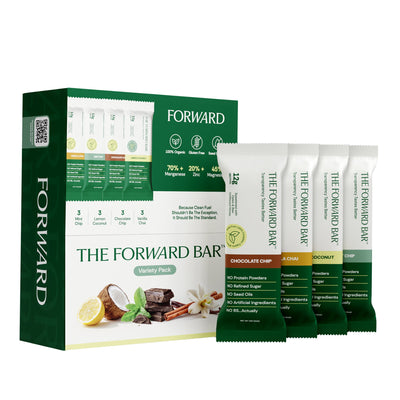
At The Forward Bar, we took a different approach.
Instead of rebuilding processed foods with added protein, we started with real ingredients.
We don’t make protein waffles.
We don’t make protein donuts.
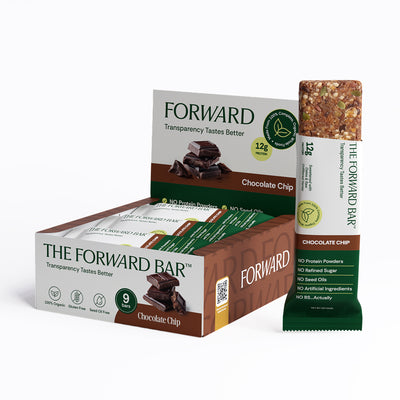
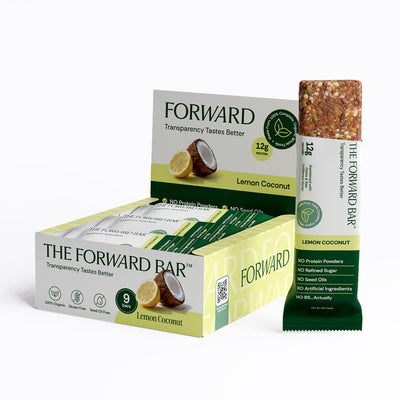
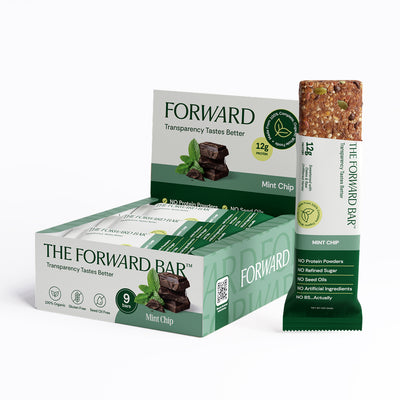
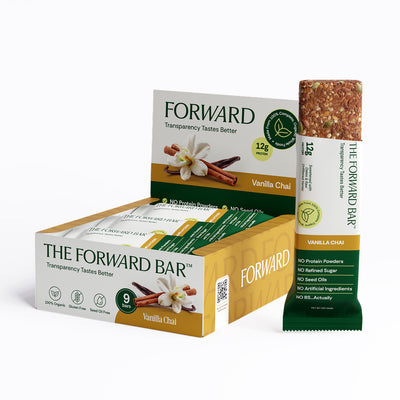
We make whole food protein bars.
Our protein comes directly from whole seeds, not isolates. Our sweetness comes from organic dates and organic raw unfiltered honey, not artificial syrups.
No refined flour.
No seed oils.
No emulsifiers.
No natural flavors.
No protein powders.
Because real nourishment doesn’t require reconstruction.
The Psychology of “Healthy Junk Food”
The modern snack aisle is filled with “better-for-you” versions of indulgent foods.
The idea is simple:
Keep the form. Add protein. Reduce sugar slightly. Rebrand as healthy.
But if a product mimics dessert in structure and formulation, it often retains many of the same industrial characteristics.
The difference between indulgence and nourishment isn’t just macros, it’s ingredient quality.
A high-protein cookie made from refined flour and artificial flavors is still engineered for taste first.
A whole food protein bar built from intact ingredients is structured around nourishment first.
That distinction matters.
Ask a Better Question
Instead of asking:
“How much protein does this have?”
Ask:
“What is this actually made from?”
If the ingredient list reads like a lab formula, it’s likely ultra-processed, regardless of protein count.
If it reads like a short grocery list of recognizable foods, you’re likely closer to real nourishment.
The Forward Standard
Protein is important. But protein quality and food integrity matter more.
We believe the future of functional nutrition isn’t about turning junk food into “protein versions” of itself.
It’s about returning to simplicity.
Whole food protein.
Recognizable ingredients.
No industrial shortcuts.
Because waffles and donuts didn’t become health foods overnight.
And adding protein powder doesn’t change that.
Forward means better structure.
Forward means less processing.
Forward means food that looks like food.


